
Toursoft Systems
Designing the operating system tour operators run their business on.
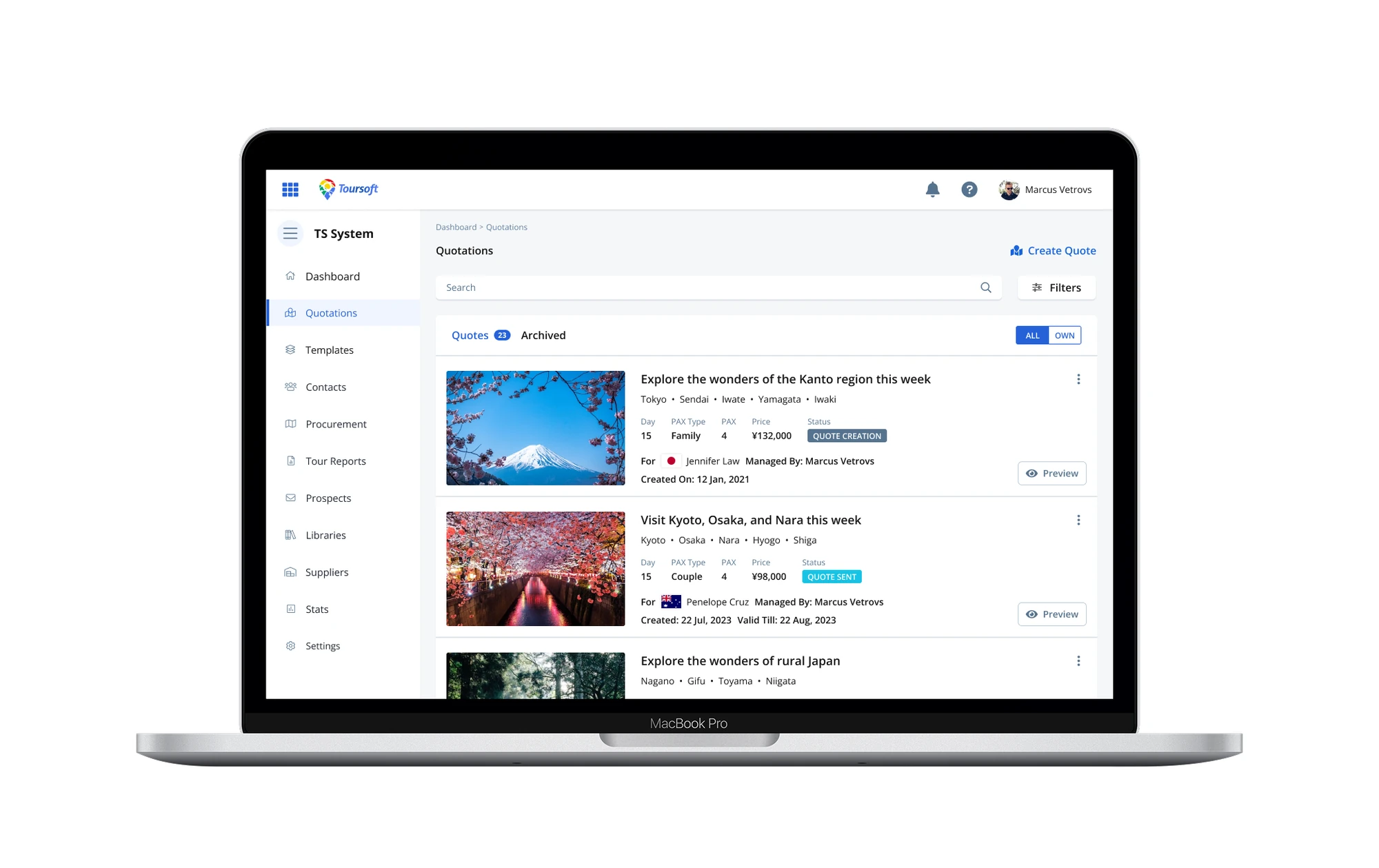
Lead Product Designer
3+ years (Dec 2021 – Jan 2025)
End-to-end product design
Enterprise SaaS
Highlights
As the first and only designer, I built TourSoft's core platform end to end: eight modules, 160+ screens, and the design system that ties them together. It now serves more than 12,000 travel agencies worldwide.
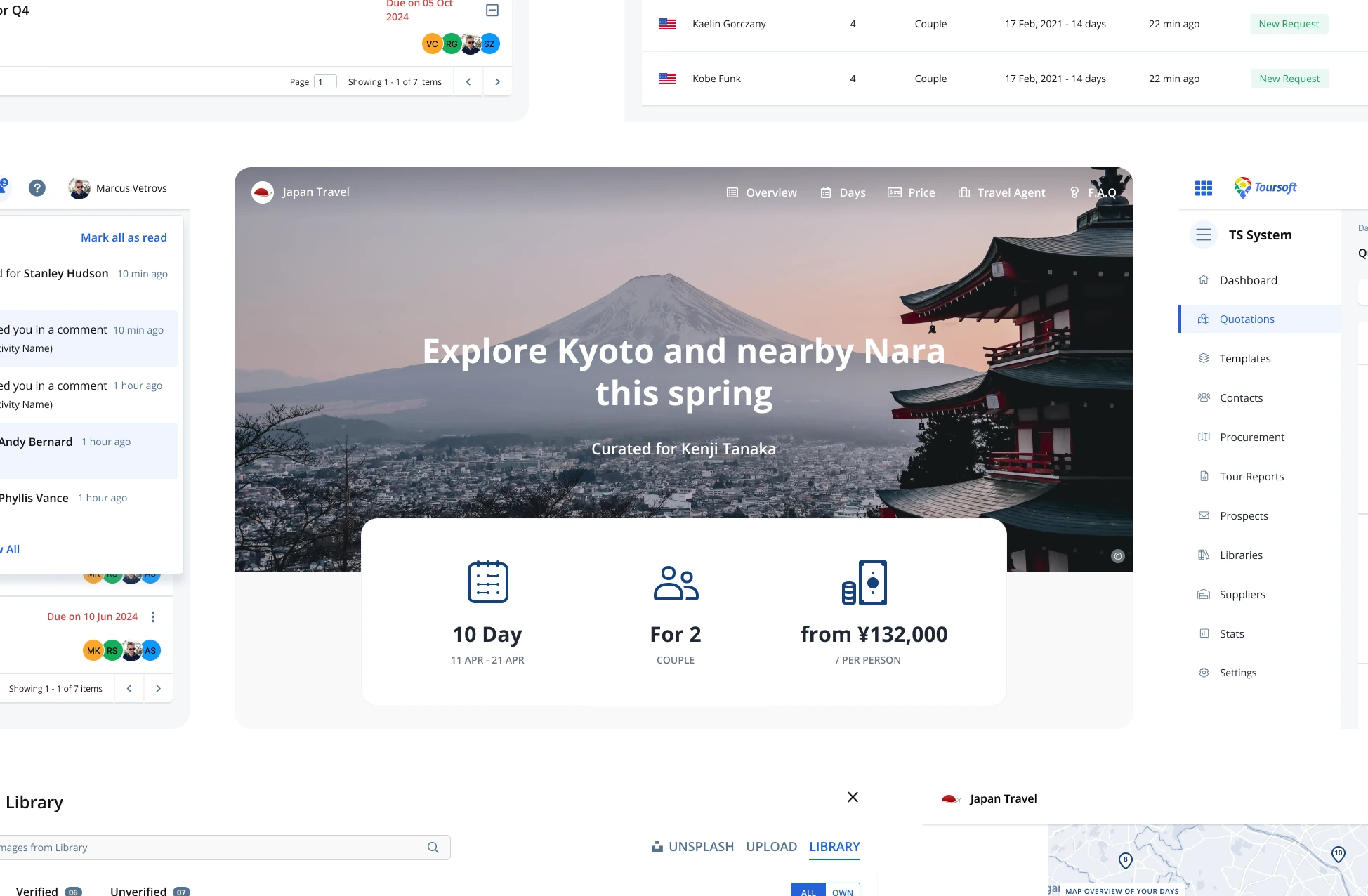
Everything a travel business runs on
TourSoft is the platform tour operators run their entire business on. I joined as its first and only product designer, which meant I owned the whole thing: the roadmap, the design system, and every core workflow, with no design team behind me.
That meant working shoulder to shoulder with the CEO and engineering rather than a design org. One instinct shaped how I spent my time: invest design effort where it actually moved the business, not just where screens looked dated.
Keep the platform coherent as it scales
Every trip a tour operator sells is really a chain: an enquiry becomes an itinerary, then a quotation, supplier costs, payments, and the documents a client finally sees. And in this business, whoever quotes first usually wins the booking.
When I joined it worked, but it had been built up in pieces rather than designed as a whole. The real challenge was never a visual refresh. It was keeping the platform clear, consistent, and fast as it scaled to thousands of agencies.
Understanding how agencies actually work
Understand the business
I sat down with the founders, Saurabh and Terrie, to understand how travel agencies run day to day: where quotes stall, how supplier knowledge gets stored, and what operators actually need from one platform.
Platform vision & constraints
From foundation to scale, in four phases
Replace fragmented tooling with a modular platform that could grow without breaking the core user workflow. The goal was to give global operators, agencies one system to build, quote, and deliver a trip, so the best quote reaches the client first.
One platform for everything.
High-level roadmap
Design system, brand refresh
Make workflows sync
Redesign, modular growth
Integrations, iTrove, mobile app
- FOUNDATIONDesign system, brand refresh
- SYNCHRONOUS INFOMake workflows sync
- PLATFORM LAYERRedesign, modular growth
- DELIVERY & SCALEIntegrations, iTrove, mobile app
Systems thinking over surface polish
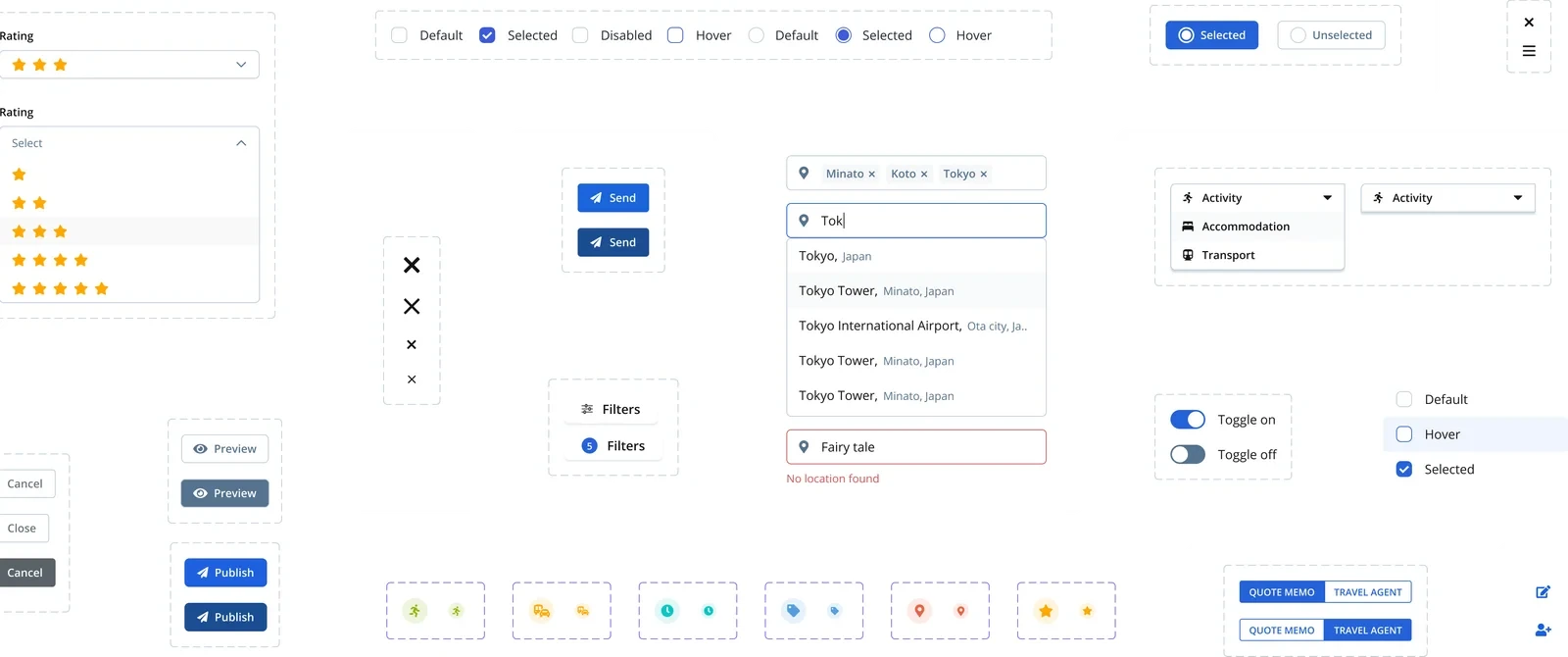
A design system had to come before more features. Without one, the visual drift already creeping in would turn into a scalability wall. So I built the shared foundation first: typography, spacing, forms, tables, and components that held up across every screen.
The payoff was strategic, not just cosmetic. Operators learn TourSoft once, and every module after that feels like the same product.
Enter once, reuse everywhere
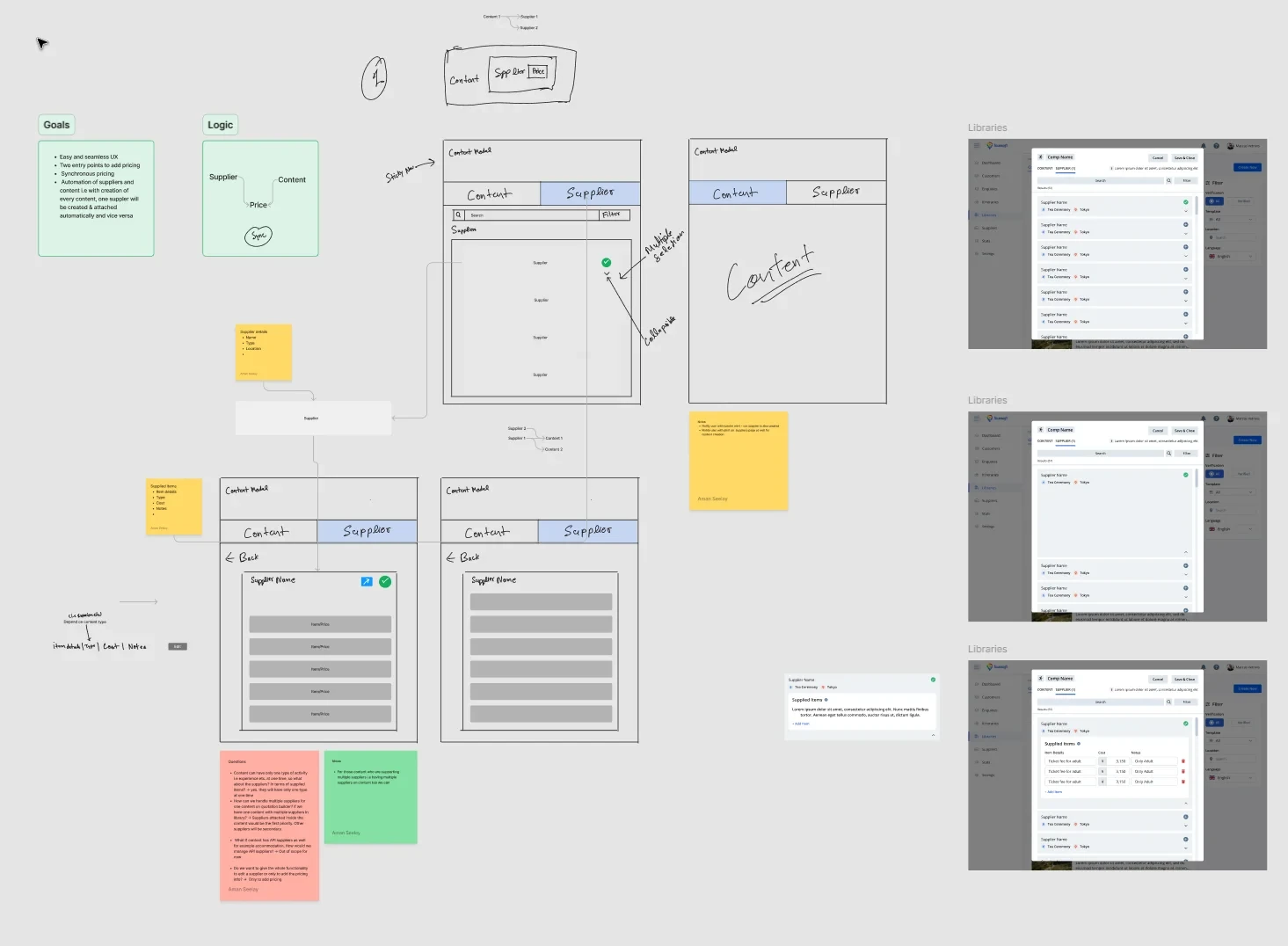
A platform this connected lives or dies on its content model. Before adding features, I worked with product and engineering to map how content, media, locations, suppliers, and pricing should relate, then validated the taxonomy with power users. The rule was easy to say and hard to earn: enter something once, and it flows forward instead of being recreated at every step.
- Reference, never duplicate: content, media, locations, and pricing are referenced by every itinerary, quotation, preview, and PDF, so a single edit propagates everywhere.
Maturing the platform, module by module
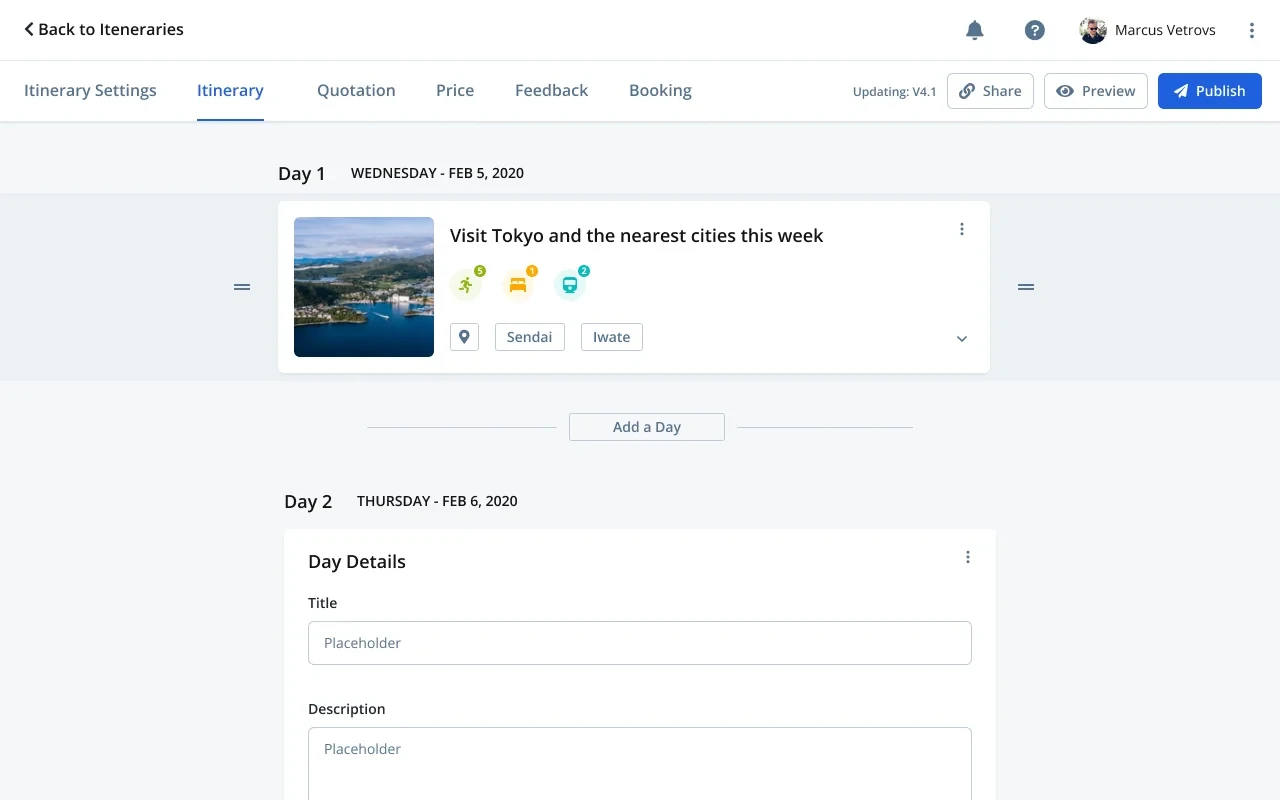
The itinerary builder was the hero workflow. Almost every booking starts here, and consultants rebuild trips hundreds of times a year, so the target was blunt: less clicking, less retyping, more reuse on every build.
- The problem
- The old builder stacked days vertically with endless scrolling, and split day creation across two competing CTAs before you had even committed to a day.
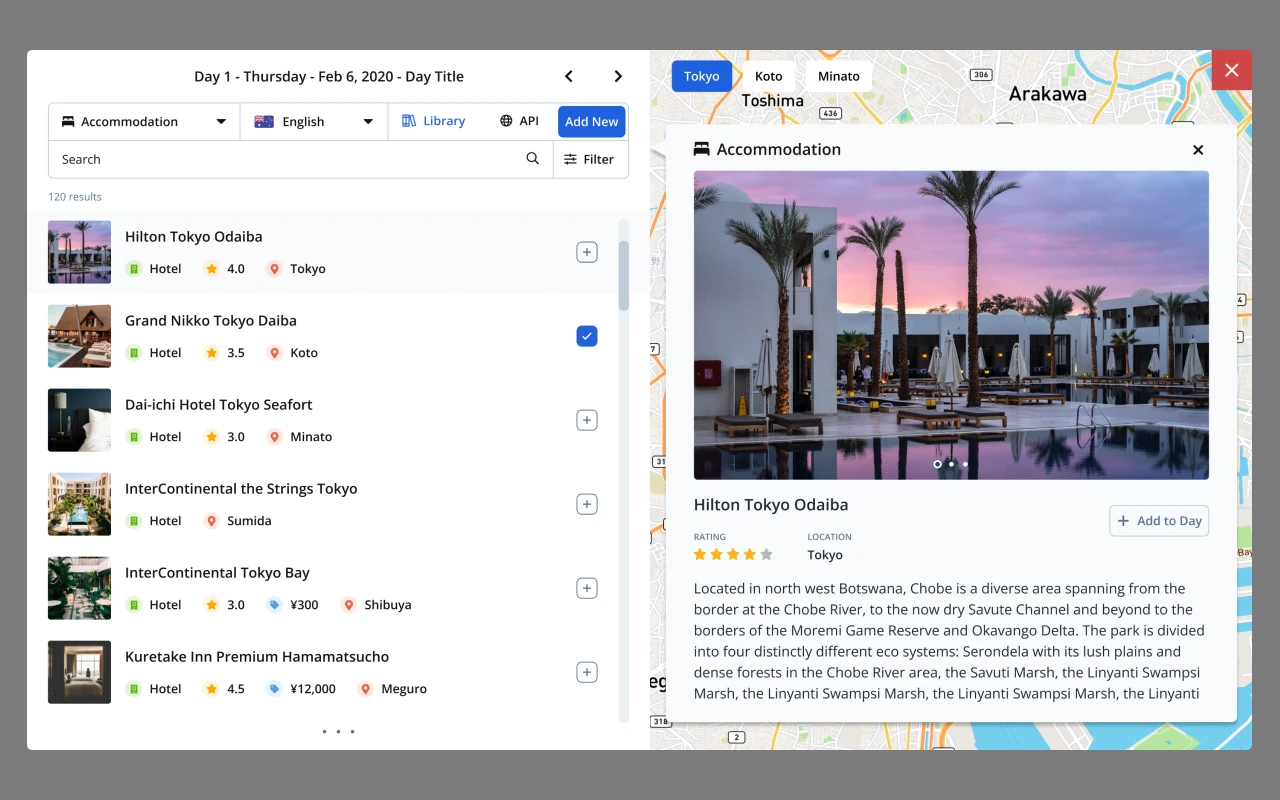
- Clicking a content row added it instantly, so consultants leaned on memory instead of the interface.
- Design decision
- Treated an itinerary as a reusable template, keeping customer specifics in the quotation so the trip structure itself stays reusable.
- Collapsed day creation into one Add a Day CTA that opens the library for a blank day or a saved template.
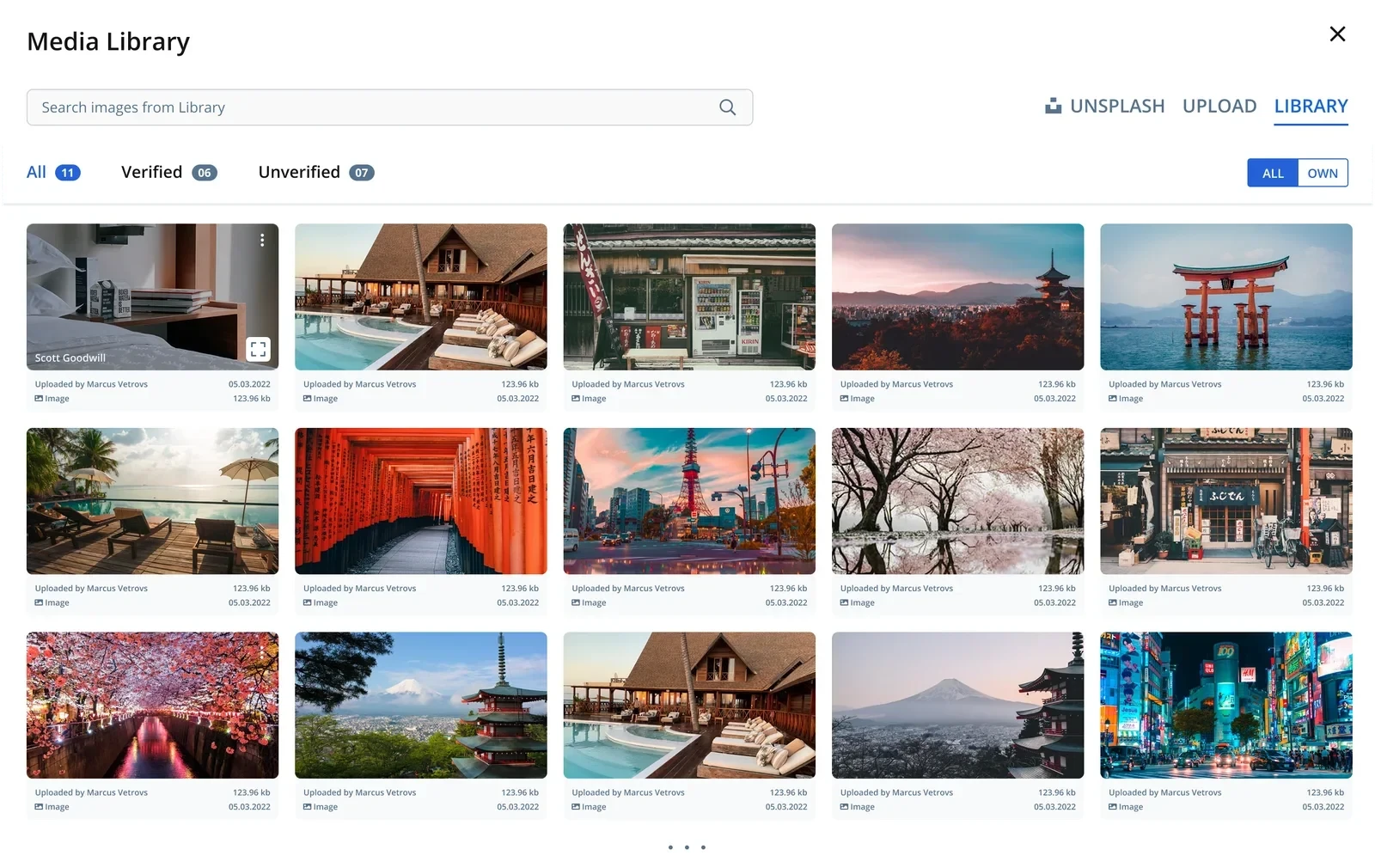
- Shifted to library-first composition: pull reusable content and Unsplash media inline instead of rewriting or re-uploading.
- Outcome
- Roughly 80% repeatable structure became real reuse, and builds got about 50% faster (a usage estimate, not a formal test).
- The commit-first, choose-second idea spread to the map modal, quotations, and library selection.
More across the platform(click to view)
Client-ready delivery
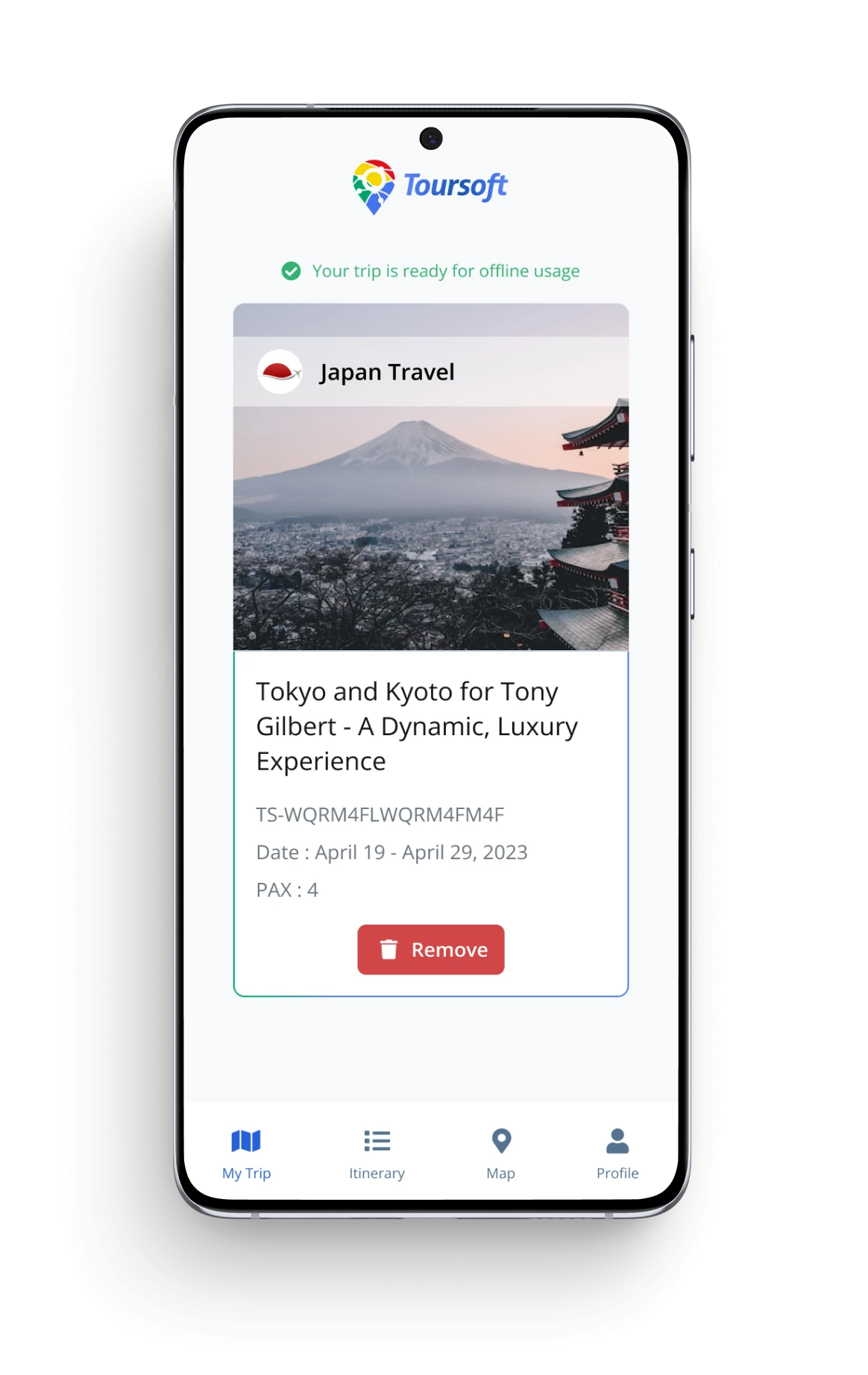
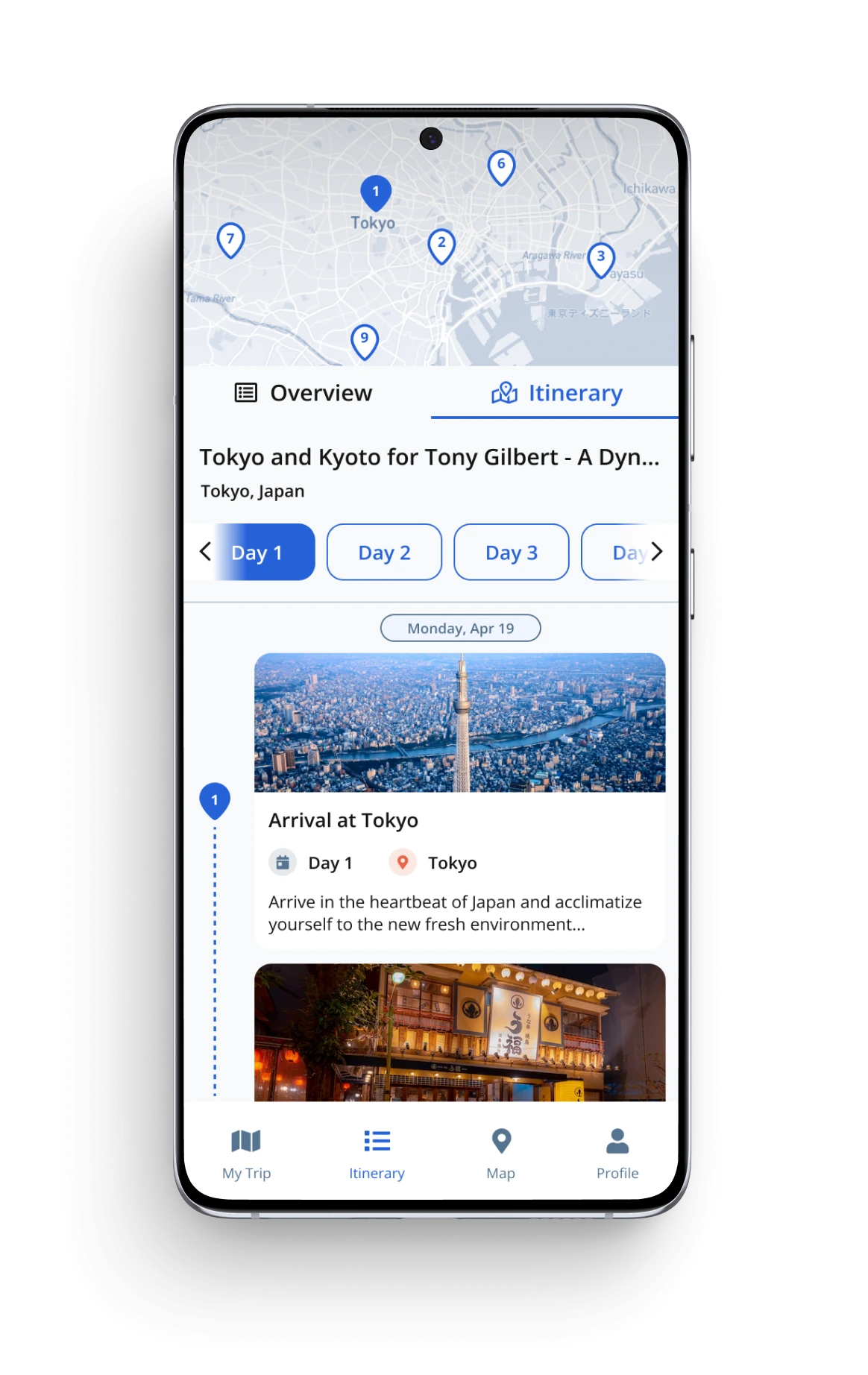
Building the itinerary is only half the job. The other half is what the client actually receives. Operators preview the full branded itinerary before sharing it, exactly as the client will see it, with day-by-day detail, maps, and library media. A dedicated PDF engine replaced broken browser printing, and share codes extended delivery to TourSoft Mobile with offline access.
Signals from operators in production
Post-launch feedback came from real travel agencies using TourSoft worldwide: in-app feedback, support conversations, and operator testimonials published on the live platform. The themes were consistent: faster workflows, library reuse, and client-ready output tied to winning bookings.
TourSoft is built in the right direction – this is how itinerary building should be done. Clean, efficient, and designed with the modern travel professional in mind.
Outcomes
What I learned
What I'd do differently
I’d instrument the core loop from year one: time-to-quote, revision count, library reuse. I made the early calls on qualitative signal and conviction, and they held, but at platform scale I wanted measured baselines to prioritize the next module and defend trade-offs with data, not just judgment.
Lessons
Enterprise UX compounds through hundreds of small interaction improvements, not one dramatic redesign. A single unified CTA can reshape an entire mental model. That lesson spread from the itinerary builder to quotations, notifications, and library selection across the platform.
Tradeoffs
A customer lost work when two people edited the same itinerary at the same time. I proposed building live editing so you could see when someone else was already in a file, but it was too costly to build then, so we shipped a smaller fix to lower the risk instead. It held, but I still think the full fix was the right call.